

Case Study: Talabat Group Order Feature
Talabat
conceptProject Details
Product design case study · talabat concept
One cart for the whole table. Everyone pays their own share.
DISCLAIMER: Independent concept by Ahmad Karmi, based on a feature I would personally use. Not affiliated with or endorsed by talabat. Restaurant, people and images are fictional.
The Problem
Twelve people, one phone, one card. Whoever places the order becomes the group’s bank for the night. Then the collecting starts. One friend left his wallet in the car. Another only has a 20 KD note. Two say they will transfer it later and the host spends the week reminding them.
Often the order never happens at all. The table is still arguing about who pays while the cart sits open, and someone ends up calling the restaurant directly.
What Group Ordering Looks Like Today
I went through the group ordering flows in Wolt, Uber Eats, Swiggy and Shopee on Mobbin, then through talabat’s own checkout. They all solve the shared cart. None of them split the payment. Swiggy’s copy says it plainly to the host: “You call the shots.” Uber Eats adds a per person spending cap, which is built for an office lunch the company pays for, not for friends on a Thursday night.
Every one of them shares the cart. None of them splits the bill.
The Idea
A group order is a live room around one restaurant. Each person builds a plate on their own phone and pays for it to lock in. The host never fronts a single fils, and the order goes to the kitchen the moment every plate is paid.
01 – Nobody is the bank.
Each plate is paid by its owner. The host carries the same risk as everyone else, which is none.
02 – Joining is one scan.
A QR code for the room and a link for the group chat. Paying for a plate needs no app.
03 – The board does the chasing.
Everyone sees who has paid. Quiet social pressure replaces the host’s reminders.
04 – Generosity still wins.
Someone often wants to pay for others. Anyone can cover another member’s share, or the whole order, in one tap.
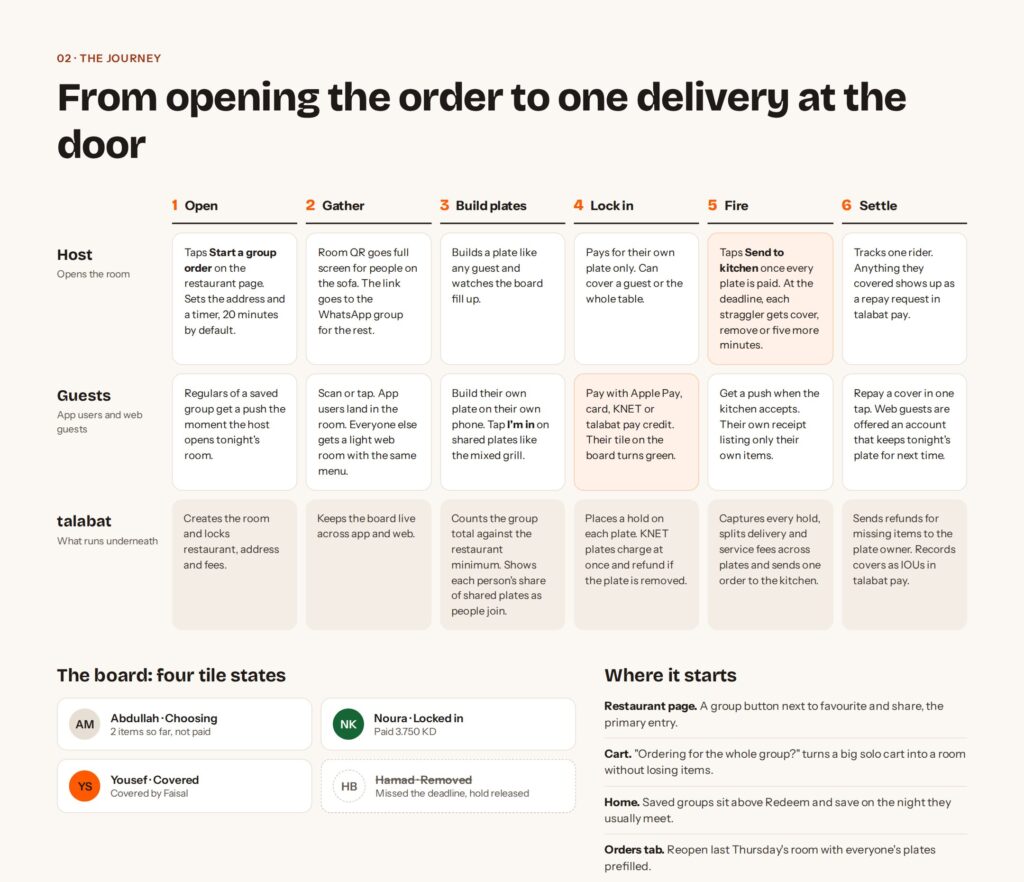
The Host Flow

1. Start from the restaurant
A Group order button sits next to favourite and share. A card on the page explains the idea in one sentence.

2. One scan to join
The QR code fills the screen for the people in the room. The link goes to the WhatsApp group for everyone else.

3. The board
Every person is a tile. Choosing, paid, covered. Shared plates show what each person owes as people join.

4. Lock in
You pay for your plate and your share of the fees. Nothing is charged until the host sends the order.

5. Time’s up
The host resolves each unpaid share: cover it, remove it or extend the deadline by five minutes.
Who Pays for What?
The rules had to be simple enough to explain at the table. Your items are yours. Shared plates split evenly across whoever joins them. Delivery and service fees split across paid plates, and delivery disappears for everyone when the host has pro. Tips are personal and pooled for the rider.
Cash on delivery is switched off inside a group order, because one rider cannot collect from twelve people at a door. A friend who only has notes hands them to someone at the table, who covers the plate from their own card. talabat never touches the cash.
One Kuwaiti detail shaped the payments design. KNET charges immediately and cannot place a hold, so a KNET plate that leaves the room becomes a refund rather than a released hold.

The Guest Without The App

1. Join from the browser
No app, no account. A name for the board is all it asks for.
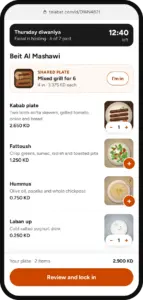
2. Build a Plate
The same menu with a personal total and a one tap way into the shared grill.
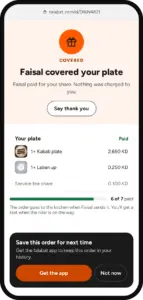
3. Covered
The host paid for this guest’s share. The guest is notified and can save the order to a new account.
The Member Who Orders Late
Most groups have one member who orders late. The deadline protects everyone else, but the better answer is to make that member not late. A reminder three minutes before the deadline, with their usual items one tap away, turns the most common delay into a quick decision.

1. Reminder
Three minutes before the deadline, members who have not ordered receive a reminder from talabat and from the host.

2. Reorder usual
The member can reorder their usual items in one tap or skip this order, and the host is notified either way.
Why Talabat Would Ship This Feature
The whole table in one basket
Groups that cannot settle the bill into solo orders or a phone call to the restaurant tend to slip away. Some order seperately, some call the restaurant and some just don’t order anymore. Take away the payment argument and the biggest basket of the week stays on Talabat.
A door for non users
Every room puts a one minute web checkout in front of people without the app, with a reason to install afterwards. Acting as a growth lever.
Talabat pay earns its tab
Covering a friend and paying them back are wallet moves. Balances stay inside Talabat.
tPro sells itself at the table
A host with Talabat Pro waives delivery for everyone. Guests see exactly what they saved. Which acts as incentive for non tPro users to sign up later.
Less cash on the road
Big group orders lean on cash changing hands outside of Talabat. Prepaid plates end the hunt for change.
A weekly ritual
Groups meet on the same night with the same faces. A saved room reopens with last week’s plates waiting. Makes regular social gatherings like Diwaniya or Game Night an easy conversion after the first group order.
How I would measure it
North star: group orders sent to the kitchen each week
- Rooms opened that reach the kitchen, and how long it takes
- Group basket size against the same users’ solo baskets
- Web guests who create an account within 30 days
- Saved rooms reopened within 14 days
What I would test first
- Whether “gift by default” on covers holds up once real money moves, or whether hosts want repay requests
- The right default timer. Twenty minutes felt right on paper; the board data will say otherwise
- How web guest checkout changes fraud and chargeback rates