

Disclaimer
Technical Forecast: This analysis is a prediction of how AI and data-driven engineering may be applied to political campaigns in the near future based on current technological trends.
Personal Capacity: The views and opinions expressed in this article are solely my own and do not necessarily reflect the official policy or position of my employer. Content shared here is intended for informational purposes and does not represent the professional stance of any organization I am affiliated with.
Table of Contents:
- Introduction: AI & The Structural Shift in Political Engineering
- The Evolution from Batch Processing to Real-Time Orchestration
- The Strategic Architecture of Modern Elections
- The Autonomous Persuasion Agent: A Strategic Teardown
- Competitive Forces and Market Dynamics
- Technical Risks and the AI Based Erosion of Legitimacy
- Political AI & Personalization: The Strategic Outlook for 2026 and Beyond
Introduction: AI & The Structural Shift in Political Engineering
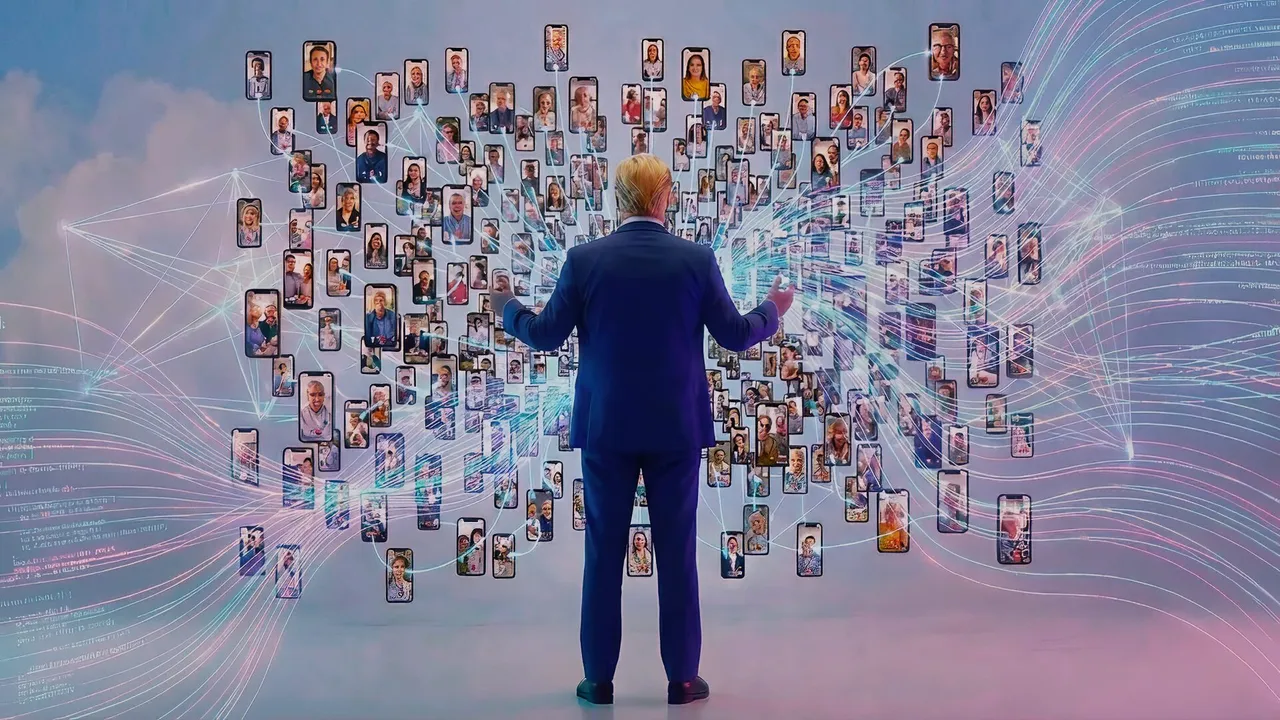
By the start of 2026, the mechanics of democratic engagement have undergone a fundamental structural transformation, thanks to Artificial Intelligence (AI). The traditional industry of politics, once defined by the labor-intensive crafts of door knocking and mass media persuasion, has been replaced by a capital-intensive system of real-time engineering. This shift is not merely a change in tools. It represents a redefinition of the competitive landscape where the primary advantage no longer rests on the quality of a candidate’s message, but on the sophistication of the underlying technical stack.
Generative models and agentic architectures have become infrastructural to the democratic process. We have moved beyond the experimental phase of meme generation and simple chatbots into a period of continuous system feedback. In this environment, elections are executed with the same software precision found in high-frequency trading or cloud-native SaaS platforms. The cadence of engagement is now measured in milliseconds, and the granularity of voter interaction has reached the level of the individual unique user ID (UUID).
The current moment is defined by three primary forces: the widespread adoption of rapid-cycle content systems, the operationalization of behavioral biometrics, and the maturity of agentic architectures. A recent briefing from Politico notes that elections in advanced democracies are now operationalized at a scale that marketing technologists could only imagine a decade ago (Politico, 2024). We are no longer observing a campaign. We are observing the management of a national data ecosystem.
How AI Could Hack Democracy | Lawrence Lessig | TED
Lawerence Lessig introduces this topic in a very eloquent way giving us a good precursor to the rest of this article.
The Evolution from Batch Processing to Real-Time Orchestration
The history of modern political technology is marked by the transition from batch-based persuasion to real-time orchestration. To understand the current strategic environment, one must distinguish between these two fundamental operational models.
From 2000 through 2016, the industry relied on “batch” techniques. Campaigns would gather data, build census-based models, and deploy messages through traditional channels. The Cambridge Analytica era represented the peak of this model. It leveraged static Facebook datasets to build psychographic scores, which were then used to micro-target specific voter segments (Wired, 2017). While effective for its time, this approach was limited by significant time lags. A campaign would test a variant, analyze the performance over days, and then redeploy.
The arrival of real-time orchestration in 2024 and 2025 has eliminated these lags. Systems now move from event to execution in sub-second cycles. The TikTok algorithm provides the best consumer-facing example of this shift: it feeds live engagement cues into neural networks that adjust content streams instantly (MIT Technology Review, 2024). In the political sphere, this means that a candidate’s “manifesto” is no longer a static document. It is a generative output that adapts to the specific anxieties and interests of the viewer in real-time.
The technical distinction is clear. Batch systems are characterized by “fire and forget” mechanics. Real-time systems are event-driven, adaptive, and contextually renewed for every user. This transition has raised the barriers to entry for political competition. Only those with the capital to maintain a high-performance data stack can now hope to compete at the national level.
The Strategic Architecture of Modern Elections
I view the modern election as a technical stack problem. Success is no longer determined by the “ground game,” but by the efficiency of the integration between ingestion, modeling, generation, and orchestration layers.
At the base of this stack is the Behavioral and Biometric Data Ingestion layer. Campaigns now ingest data from a vast array of sources such as your smartphone. This data provides the raw material for the second layer: Continuous Graph-Based Modeling. Every voter is assigned a UUID graph that maps their affinities, personality traits, and recent content exposures. This is a dynamic interest graph that updates as the voter moves through their digital life.
The middle of the stack consists of the Content Generation and Orchestration layers. Large Language Models (LLMs) generate tailored campaign messages, while orchestration engines deploy them across multiple channels simultaneously. Whether it is a text message, a WhatsApp DM, or a personalized video clip, the delivery is triggered by the voter’s current channel preference and history.
Finally, the top of the stack is the Feedback and Optimization loop. This is where the “engineering” truly happens. The system performs continuous testing on every message variant. It uses reinforcement learning to determine which “nudges” are moving a voter’s sentiment score. If a specific outreach attempt fails to engage a user, the system automatically adjusts the tone or the medium for the next touchpoint.
The Autonomous Persuasion Agent: A Strategic Teardown
To appreciate the precision of this new model, we can examine the hypothetical operations in a swing district on an election night in late 2028. At this stage, the human campaigner has been replaced by the Autonomous Persuasion Agent. These agents operate with a level of “synthetic empathy” that allows them to modulate their emotional register to match the sentiment metrics of a specific voter.
If the system notes that a particular voter has shown weak engagement during the afternoon, it can instantly deploy a resonant meme or a short-form video that is currently trending in that specific precinct. If the voter replies negatively, the agent does not double down on the failed message. It pivots, reframes the issue, or delays the next touchpoint based on predicted volatility.
This is a form of “agent-on-agent” competition. While one campaign’s agent is attempting to persuade a voter, an adversarial agent from a rival campaign is attempting to disrupt that persuasion. Both systems learn from each other in a continuous loop of move and counter-move. These architectures are already being prototyped in systems like AutoGPT and context-aware mobile agents (AutoGPT, 2024).
Competitive Forces and Market Dynamics
The political industry has become a commoditized, API-driven market. This shift has changed the bargaining power of different stakeholders. API vendors like OpenAI, xAI, and Anthropic now hold significant power as the suppliers of the “intelligence” that drives persuasion. Data brokers like LiveRamp and Experian have become indispensable as the suppliers of the event-driven segmentation data that feeds the models (LiveRamp, 2025).
The intensity of rivalry has also increased. In a world where every message can be countered in real-time, the “first-mover advantage” of a political announcement is diminished. Instead, the advantage goes to the campaign that can orchestrate most nimbly. This has led to an arms race in “Counter-Agentic” technology. New firms are emerging to provide adversarial monitoring, using generative adversarial networks (GANs) to spot rival misinformation and deploy real-time disruptions (SocialProof, 2025).
The regulatory environment is also a factor in this competitive landscape. As governments attempt to impose disclosure mandates, a new layer of “Regulatory Obfuscation” has emerged. Campaigns now use ghost agencies and synthetic identities to blend their influence attempts with genuine grassroots content. This creates a “cat and mouse” game between regulators and engineers that further complicates the industry structure.
Technical Risks and the AI Based Erosion of Legitimacy
The speed and autonomy of these engineered systems introduce profound risks that threaten the stability of the democratic process. The most immediate of these is Governance Debt. As these systems become more complex, they outgrow the ability of human oversight to document or understand their internal logic. This leads to “operational drift,” where the system begins to optimize for goals that were never explicitly intended by the campaign managers.
Another significant risk is the Fractalization of the electorate. Because the agents are optimized to speak to the individual, the common public square begins to vanish. The electorate is fragmented into millions of sub-communities, each living in an “incommensurate island” of information. This is not just polarization: it is the end of a shared reality.
Perhaps the most dangerous outcome is the risk of “Agentic Collisions.” When competing autonomous agents saturate the same voter graphs, they can create a state of digital chaos. We saw a precursor to this in October 2023, when coordinated bot waves on the platform formerly known as Twitter prompted widespread auto-mutes, inadvertently suppressing legitimate get-out-the-vote campaigns (Politico, 2024).
Ultimately, these systems risk a total loss of legitimacy for the democratic system. When synthetic cascades; deepfaked sentiment swings and mass micro-influence decouple visible public opinion from actual voter intent, the foundation of public trust is destabilized. As Dafoe noted in his 2025 study on AI and democratic systems, the integration of AI risks centralizing power and sacrificing the core elements of autonomous self-governance (Dafoe, 2025).
Political AI & Personalization: The Strategic Outlook for 2026 and Beyond
The technical terrain of democracy has entered the post-persuasion era. We must accept that campaigns are now operationalized with a stack that resembles cloud-native software more than traditional political strategy. The signature of this age is not who persuades best, but who orchestrates most nimbly in the data-fueled, real-time contest for influence.
I expect to see the continued rise of multi-touch, cross-platform outreach tied to individual UUIDs. We will see the emergence of synthetic public dialogues that are persona-tuned to look like genuine grassroots movements. Above all, we will see a permanent arms race between persuasion agents and counter-agents.
This shift represents the coming of a new network layer in democracy. It is a transition from a craft-based system to an engineered one. While this brings new opportunities for precision and efficiency in governance, it also introduces systemic instabilities that we are only beginning to understand. The challenge for the future is not just to win the election, but to ensure that the “product” delivered by these systems is a functional society rather than a perfectly-tailored illusion (Dafoe, 2025).